
Parents

          Pupils

          Staff

          Governance

          Meet our Community

          Wellbeing

Computing Department

Department Curriculum Vision

Curriculum map
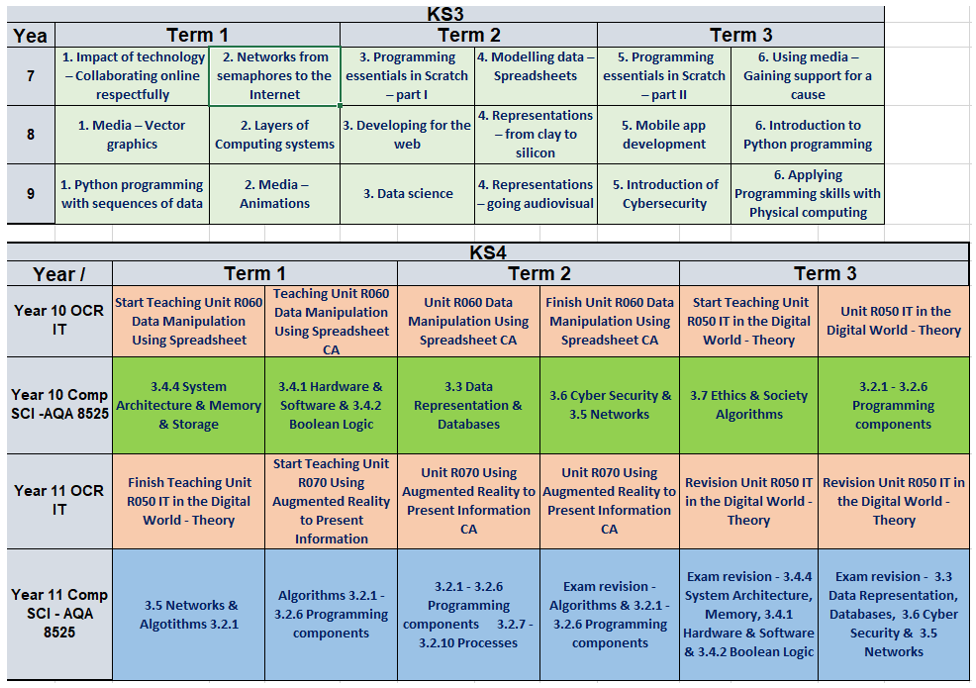
KS3 Computing Overview

The KS3 Computing curriculum is designed to provide pupils with a broad, balanced and engaging education in Digital Literacy, Information Technology and Computer Science. It builds upon the key principles of the National Curriculum, developing pupils’ understanding of computational thinking, abstraction, logic, algorithms, data representation, computer systems, networks, cybersecurity and online safety. Throughout Key Stage 3, pupils are given opportunities to analyse problems, design solutions and develop programs using both block-based and text-based programming, with Python forming a significant part of the curriculum as pupils progress through Years 7, 8 and 9.

The curriculum is carefully sequenced to ensure knowledge and skills are developed progressively. In Year 7, pupils establish strong foundations through units covering E Safety and Artificial Intelligence, computer components, spreadsheets and introductory programming using Scratch and Python. In Year 8, pupils deepen their understanding of cybersecurity, encryption, algorithms, advanced spreadsheet techniques and Python programming. By Year 9, pupils are applying these skills in more sophisticated contexts through topics such as binary and computer logic, spreadsheet project development, Artificial Intelligence and the ethical implications of computing. This progression ensures pupils acquire a secure understanding of both the theoretical and practical aspects of computing while preparing them for the demands of Key Stage 4.

A key aim of the curriculum is to develop confident, responsible and creative users of technology. Pupils learn to appreciate both current and emerging technologies, understanding their benefits as well as the ethical, legal and social challenges they may present. Online safety, digital wellbeing, cybersecurity and responsible use of Artificial Intelligence are embedded throughout the curriculum, enabling pupils to become informed and responsible digital citizens. Alongside technical knowledge, pupils develop valuable transferable skills including problem solving, critical thinking, data analysis, collaboration, communication and project management, all of which support success across the curriculum and beyond school.

The Information Technology strand of the curriculum provides pupils with practical experience using industry standard software and digital tools. Through spreadsheet and project-based units, pupils learn to plan, design, create, test and evaluate digital solutions for a range of audiences and purposes. These experiences closely support progression into KS4 OCR Cambridge National Information Technologies, allowing pupils to develop many of the practical and analytical skills required for successful completion of vocational coursework units.

Assessment is systematic, frequent and designed to support progress for all learners. Each unit includes a series of assessment opportunities that provide both formative and summative feedback. Pupils complete a low stakes knowledge assessment early in each unit to identify misconceptions, monitor retention and inform intervention where necessary. This is followed by practical and theoretical assessments that measure pupils’ ability to apply knowledge, demonstrate technical skills and solve computing problems. End of unit assessments evaluate overall attainment and progress against curriculum objectives.  Assessment outcomes are combined with classwork, practical projects and independent tasks to provide a comprehensive picture of pupil achievement.

Pupils receive timely and personalised feedback that identifies strengths and areas for development. Gap tasks form an integral part of the assessment process, enabling pupils to revisit misconceptions, address gaps in knowledge and improve their understanding. All pupils in Years 7 to 11 maintain exercise books that contain classwork, assessment outcomes, feedback, gap tasks and targeted improvement activities, ensuring progress is tracked effectively and learning is continuously refined over time.

Through this carefully structured curriculum, pupils leave Key Stage 3 with a strong foundation in Computing, well developed digital skills and the confidence to progress successfully into KS4 Computer Science, OCR Cambridge National Information Technology and the increasingly digital world beyond education.

Year 7

In Year 7, pupils are introduced to the working practices and expectations of the Computing Department, helping them to develop confidence and independence in their use of technology both in school and beyond. The curriculum begins with a Baseline Assessment and Getting Started unit, which enables teachers to assess prior knowledge and support pupils in making a successful transition to secondary Computing.

Pupils then study E Safety, Artificial Intelligence and Computer Components, where they develop an understanding of how technology can be used safely, respectfully, responsibly and securely. They learn how to protect their online identity and privacy, recognise inappropriate content, contact and conduct and know how and when to report concerns. Alongside this, pupils explore the key components of computer systems and gain an understanding of how hardware and software work together.

Through the Internet and E-safety unit, pupils develop important digital literacy skills, learning how the internet functions, how information is shared online and how to maintain a healthy and balanced relationship with technology. These topics help pupils become responsible and informed digital citizens.

The Introducing Spreadsheets unit provides pupils with valuable lifelong digital skills using Microsoft Office 365. Pupils learn how to organise, analyse and present data using spreadsheets, developing skills that are transferable across the curriculum and highly relevant to further study, employment and everyday life.

To develop their understanding of Computer Science, pupils study Programming through Scratch and Python Sequences. They begin with block-based programming in Scratch, designing and creating interactive programs while developing their understanding of algorithms, sequencing, selection and iteration. Pupils are then introduced to fundamental Python programming concepts, providing a strong foundation for the transition to more advanced text-based programming in later years.

Throughout Year 7, pupils are exposed to a range of software, technologies and computational thinking skills that prepare them for Key Stage 4 and the wider world of work. The curriculum is carefully structured to develop digital literacy, information technology and computer science knowledge, enabling pupils to use technology confidently, responsibly and productively in an increasingly digital world.

Year 8

In Year 8, pupils build upon the knowledge, skills and routines established in Year 7, allowing them to become more confident, independent and creative users of technology. The curriculum encourages pupils to further develop their problem solving, computational thinking and programming skills while exploring how technology can be used safely, effectively and responsibly in a range of contexts. Pupils are expected to use a variety of software applications throughout the year and are given opportunities to apply their learning to real world scenarios.

The year begins with Internet Safety, Artificial Intelligence, Cybersecurity and Encryption, where pupils deepen their understanding of online safety, digital wellbeing and emerging technologies. They explore the opportunities and risks associated with AI, learn how to protect personal data, understand common cyber threats and investigate how encryption is used to secure information and communications. Pupils also develop an awareness of relevant legislation and ethical considerations surrounding the use of technology.

Pupils continue to strengthen their Information Technology skills through the Advanced Spreadsheet unit. Using Microsoft Office 365, they learn to analyse, manipulate and present data using more sophisticated spreadsheet tools and techniques. These skills support learning across the curriculum and provide valuable experience that is highly transferable to further education and the workplace.

A significant focus of Year 8 is the development of Computer Science knowledge through Algorithms and Python Programming Selection. Pupils learn how to design, trace and evaluate algorithms before applying these concepts within text-based programming. Through a structured Python Programming Sequence, pupils build on their previous programming experience and develop their understanding of variables, inputs, outputs, data types and program flow. They then progress to Python Programming Selection, where they use conditional statements to create more complex and interactive programs that solve a range of problems.

Throughout the year, pupils create and evaluate digital solutions while considering audience, purpose, usability and reliability. They are encouraged to think critically, analyse data, develop logical approaches to problem solving and communicate their ideas effectively through technology. The Year 8 curriculum provides a strong foundation for further study in Computer Science and Information Technology, while continuing to develop the digital literacy, resilience and lifelong learning skills required in an increasingly digital world.

Year 9

In Year 9, pupils continue to build upon the knowledge and skills developed in Years 7 and 8 through a balanced curriculum that further strengthens their understanding of Digital Literacy, Information Technology and Computer Science. The curriculum is designed to deepen technical knowledge, promote independent learning and highlight the wide range of career pathways available within the computing and technology sectors. Pupils are encouraged to make connections between Computing and other curriculum subjects while developing the critical thinking, problem solving and analytical skills needed for future study and employment.

The year begins with E Safety, Artificial Intelligence and the Ethics of Computing, where pupils explore how emerging technologies are shaping society and the workplace. They examine the opportunities and challenges presented by Artificial Intelligence and develop an understanding of the ethical, legal and social implications of technology. Pupils learn how to use technology responsibly, evaluate the impact of computing on individuals and society, and consider the importance of ethical decision making in a digital world.

Building on their previous Information Technology skills, pupils undertake a Spreadsheet Project: Planning, Using Design Tools, Creating a Solution and Testing. This extended project allows pupils to apply their knowledge of spreadsheet design and data handling to real world scenarios. They investigate the needs of users, plan effective solutions, analyse and interpret data, and evaluate the effectiveness of their final products. Through this process, pupils gain a deeper understanding of how data can be used to inform decisions and carry meaning, while developing project management and problem-solving skills.

The project closely complements the skills required for KS4 OCR Cambridge National Information Technology, as pupils follow a structured development process that includes planning, designing, creating, testing and evaluating digital solutions. This provides valuable preparation for coursework-based units and helps pupils develop the practical and analytical skills needed for success at Key Stage 4.

A significant focus of Year 9 is the development of computational thinking and programming skills through Python Programming Sequences and Python Programming Iteration. Pupils build increasingly sophisticated programs using text-based programming techniques, applying selection, iteration and decomposition to solve a variety of problems. They learn to design, test and refine solutions while developing resilience and confidence as programmers.

Further Computer Science concepts are explored through Binary and Computer Logic, where pupils are taught how different types of data, including text, images and sound, are represented digitally using binary. They investigate the fundamental principles that underpin computer systems and develop an understanding of how logic is used within computing to process information and make decisions. These topics provide an excellent foundation for GCSE Computer Science.

Throughout Year 9, pupils are challenged to apply their knowledge across a range of contexts, evaluate the effectiveness of digital solutions and consider the wider impact of technology on society. By combining practical skills with theoretical understanding, the curriculum prepares pupils for the demands of Key Stage 4 while equipping them with the digital, analytical and problem-solving skills required for an increasingly technology driven world.

KS4 Overview

KS4 curriculum features have two distinct pathways.  These pathways give pupils an opportunity to study either AQA GCSE Computer Science course or OCR Cambridge National Information Technology to sufficient depths, allowing them to build a solid foundation to progress to higher levels of study or to a professional career.

GCSE Computer Science 

The course helps develop an interest in computing and gain confidence in computational thinking which is a transferable skill.  There are two written exams at the end of Year 11.  It is a solid foundation for students to progress on to Computer Science at A-Level and for those who are considering studying computing subjects at university.  Topics that covered in the curriculum include:

  1. Fundamentals of algorithms
  2. Programming
  3. Fundamentals of data representation
  4. Computer systems
  5. Fundamentals of computer networks
  6. Cyber security
  7. Relational databases and Structured Query Language (SQL)
  8. Ethical, legal and environmental impacts of digital technology, including issues of privacy


Cambridge Nationals IT Level 1/ Level 2 J836

The Cambridge National in IT qualification will inspire and equip learners with the confidence to use skills that are relevant to the IT sector and more widely. It covers the use of IT in the digital world, Internet of Everything, data manipulation, human-computer interface (HCI) and augmented reality.

The qualification will also help learners to develop skills that can be used in other life and work situations, such as:

  • Planning and designing IT solutions and products for a given purpose
  • Selecting the best tools and techniques to solve a problem
  • Solving problems by exploring different software application tools and techniques
  • Creating IT solutions and digital products
  • Use of planning techniques to complete tasks in an organised and timely way
  • Finding imaginative ways to solve IT problems.

This qualification will complement other learning that you are completing for GCSEs or vocational qualifications at Key Stage 4 and help to prepare you for further study. 


For further details, please contact Ms Ali, Head of IT & Computer Science